
Center
for Advanced Studies of Planetary Systems
Planetary systems research is one of the most dynamic parts in modern
astrophysics. The recent activity to a large extent was stimulated by the
announcement in 1995 of the discovery of the first extrasolar
planet orbiting a solar-like star 51 Pegasi made by Geneva Observatory group.
Since then, over 200 planets in more than 170 planetary systems have been
discovered by various techniques. The research proceeds along multiple lines
including:
· Search for new planets
· Studying of planet birth places to understand planet formation
· Studying host stars to understand why not all the stars have planets and
to define the conditions for potential existence of life which are called
"habitable zone"
· Development of new instruments capable of detecting radiation coming from
planets in order to look for signatures of biological activity
· Studies of our solar system look for the origins of water on Earth,
tracing stories of atmospheres on Mars and Venus, studying the properties of
planetary magnetic fields and their interaction with the solar wind
· Theoretical modelling of planet formation and
evolution: from chemical stratification of the protoplanetary disk to dust
particle formation and subsequent hierarchal growth of planetesimals.
As one can see the field combines technical, observational and theoretical
efforts. It also requires strong multidisciplinary interaction since the
systems that we study cannot be brought to a lab and dissected. Swedish
Astronomy, Space physics, Geosciences and solid state physics have world-leading
expertise in the areas relevant to planetary systems research. The role of
· Spectroscopic and interferometric observations
of proto-planetary disks and host stars, characterisation
of these objects in terms of global physical parameters (mass, temperature,
size and chemical composition)
· Theoretical modelling of
planetary formation and evolution with the emphasis on non-equilibrium
processes in gas and dust, radiative energy transport, interaction with
ionizing radiation, magnetic and electric fields, planet dynamics
· Education of young astronomers interested in entering this field
· Public outreach
We plan to select specific scientific goals and open questions where we
have more extensive expertise and expect to achieve major progress through
cross-disciplinary interaction. In order to identify the most promising
research directions we looked at following question:
·
What are the outstanding challenges in planetary systems
research?
·
What are our common interests?
·
What are the topics where cross-disciplinary approach can
be most effective?
·
What are the areas where we a particularly good?
We also looked at the “tools” that we have:
|
Observations/Technology 1. Space
technology/Instrument development 2. Ground-based observing
facilities for surveys, spectroscopy, interferometry, radar probing 3. Space-based observing
facilities 4. in situ measurements |
Theoretical/Numerical models 1. Microphysics ·
Molecular/Ionization balance ·
Phase transitions ·
Interaction between various types of matter, radiation
and magnetic/electric field ·
Non-equilibrium phenomena in the above processes 2. Macrophysics ·
1D and 3D dynamical and hydrodynamical
simulations ·
Stratification of protoplanetary disks ·
Planet formation and evolution ·
Planetary magnetic fields |
|
Bridging observations and models |
|
Project proposal outline from 2005 (PDF)
CVs and publication lists
Curricula, publication lists and research interests of people participating
in the application for Linnéstöd in 2006
(files are in PDF format):
·
Paul Barklem:
CV and
Publication list
·
Björn
Davidsson: CV, Publication list
and Research
interests
·
Ola Karlsson:
·
Kjell Eriksson:
CV and Publications
·
Bengt Gustafsson: CV and Publications
·
Ulrike Heiter: CV, Publications
and Research
interests
·
Susanne Höfner:
CV and Publications
·
Oleg Kochukhov: CV, Publications
and Research
interests
·
Claes-Ingvar Lagerkvist: CV and Publications
·
Nikolai Piskunov: CV and Publications
·
Hans Rickman: CV and Publications
·
Nils Ryde:
CV and Publications
·
Johan Warell:
CV and
Publication list, Research
interests
·
Andreas Korn: CV and Publication
list
·
Thomas Leyser:
Research
interests
·
Mats André: Research
interests
·
Stephan Buchert:
Research
interests
·
Karin Ågren:
·
Jan-Erik Wahlund: Research
interests
·
Peter Lazor:
·
Heidar Thor:
News
· Vetenskapsrådet
did not grant us a Linnéstöd L. Thanks everybody! It was great work.
Here
are some lines from the final evaluation form.
·
· Some examples of advanced numerical simulations of planet
formation can be found here
· The deadline for the Linné
round of application 2007 will be in May 2007
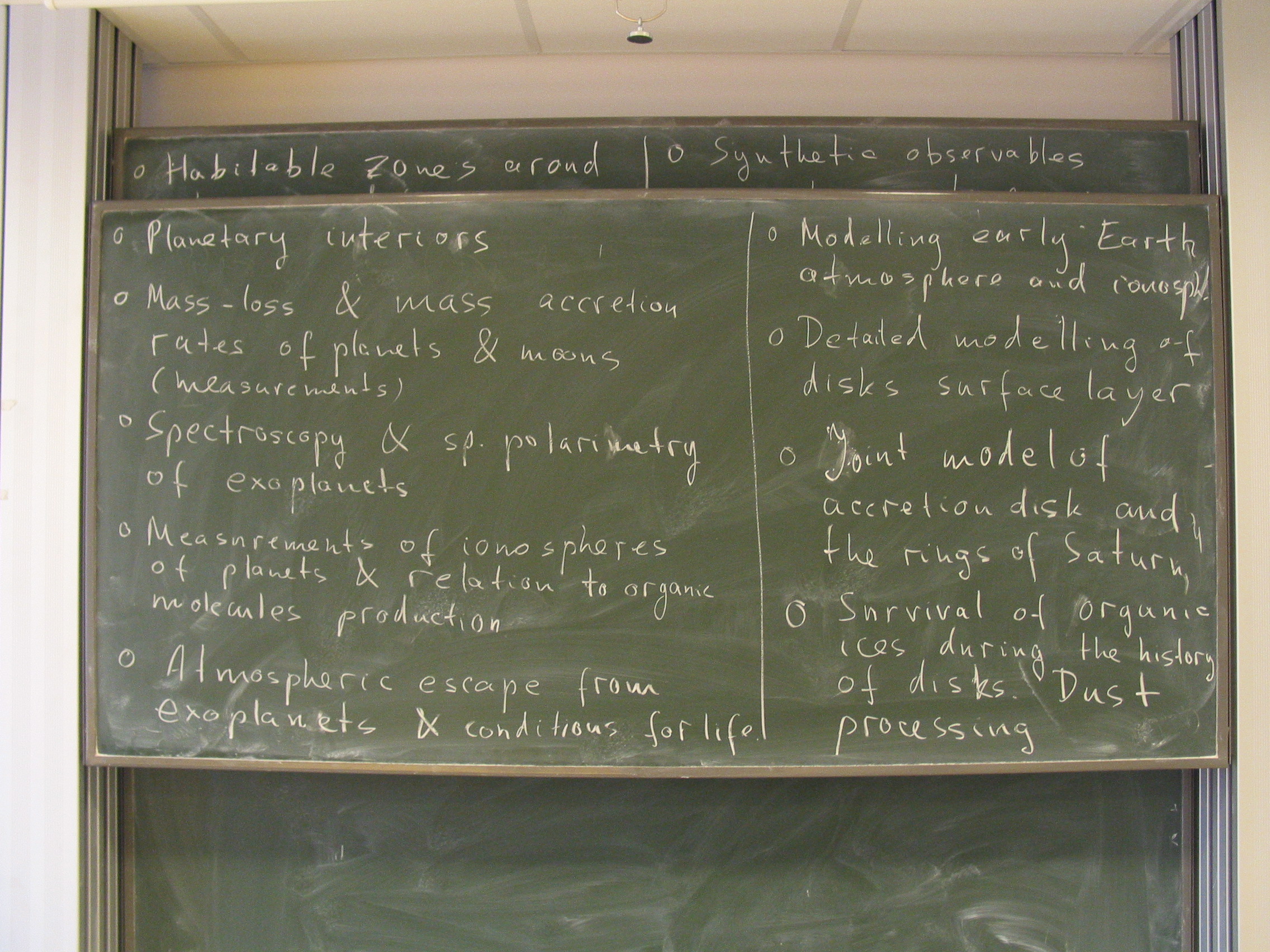
· The processed and sorted notes from the brainstorm on
November 21st 2006 will appear here.
Meanwhile enjoy the originals:
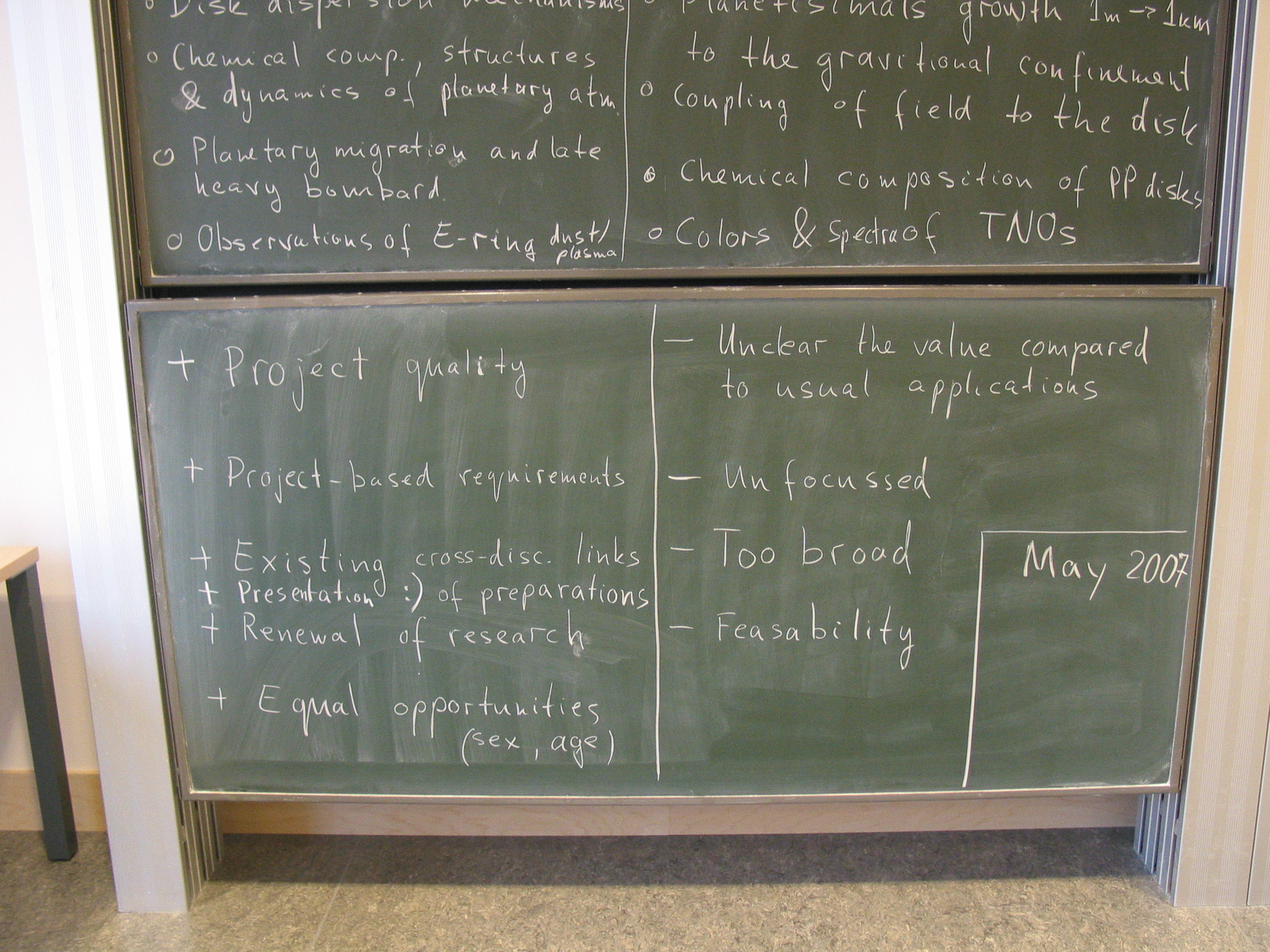
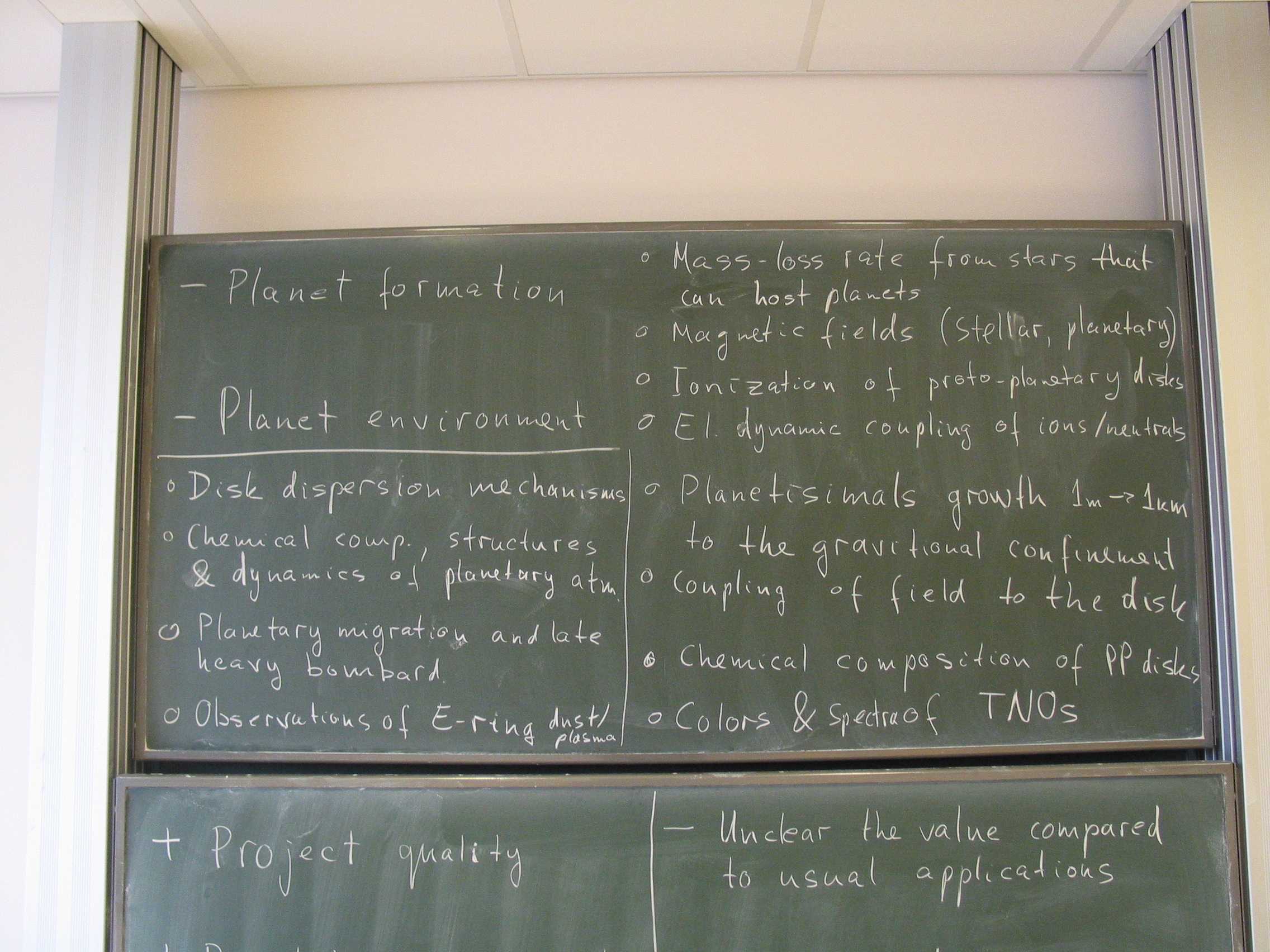
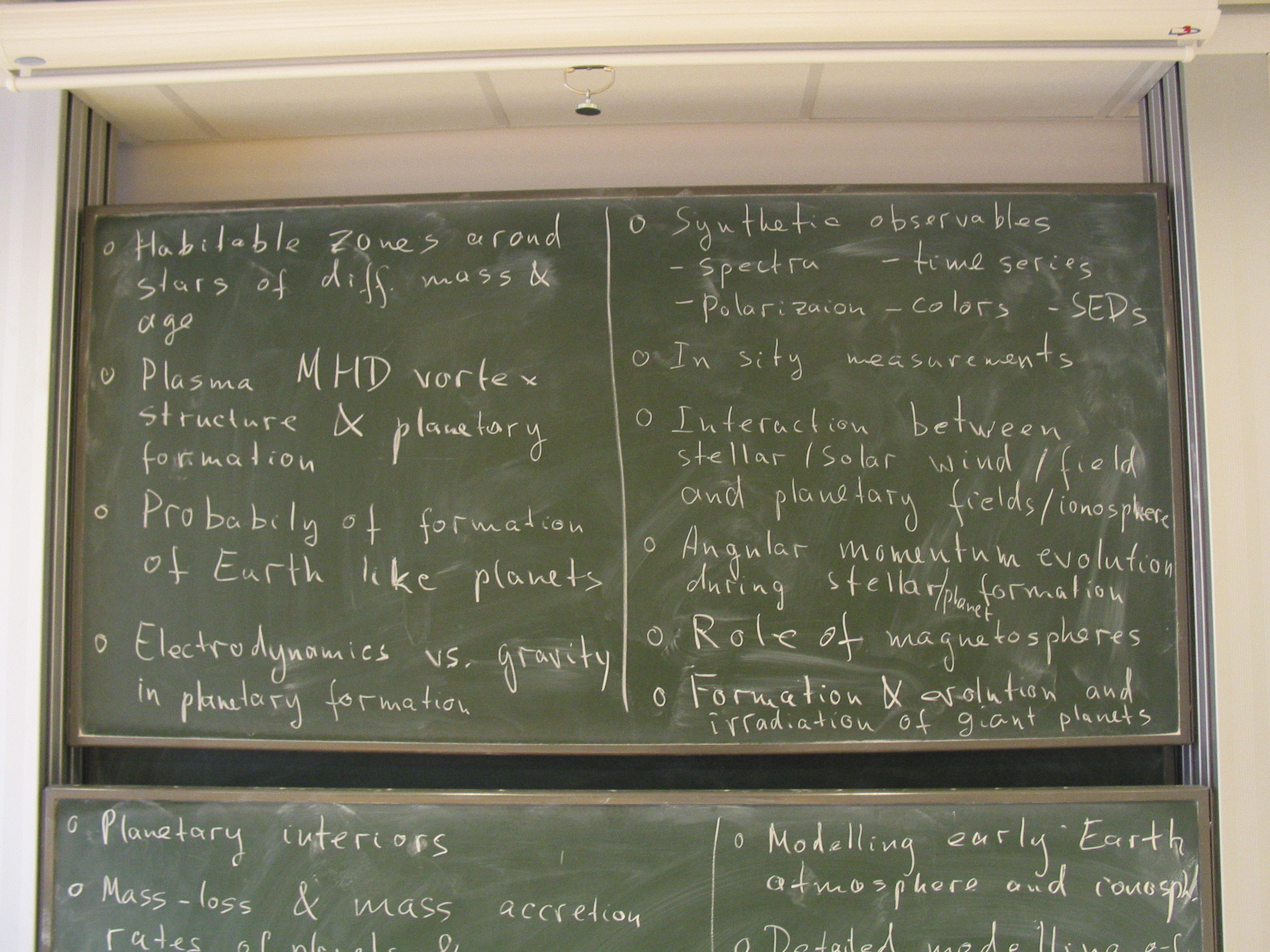
· Presentation
at the APEX/ALMA workshop in Lund on February 15th, 2007
Application
round 2007
· Presentation
of CASPS to the Teknat (slides in pdf
format) on May 2nd, 2007
· CASPS
was selected among 5 proposal from Uppsala Teknat to
submit the actual Linné application to VR
· Instructions
and tools for Linné application can be found here
· Final
version of the project description as submitted to the VR
The CASPS Linné
application was submitted on November 2nd, 2007!
Timeline:
2007
- Nov 26-27: General Expert Panel meets
- Dec-Jan: International experts will be identified
2008
- January: International experts are contacted
- March 25: Deadline for reviews
- April/May: Panel meetings
- May 29: Review panels
meet General Expert Panel
- 1st of July:
Funding decisions
Contacts
Contact persons:
Nikolai Piskunov
©
2006-10-17.
Box 515, SE-751 20